
field and folk art from Golden, Colorado
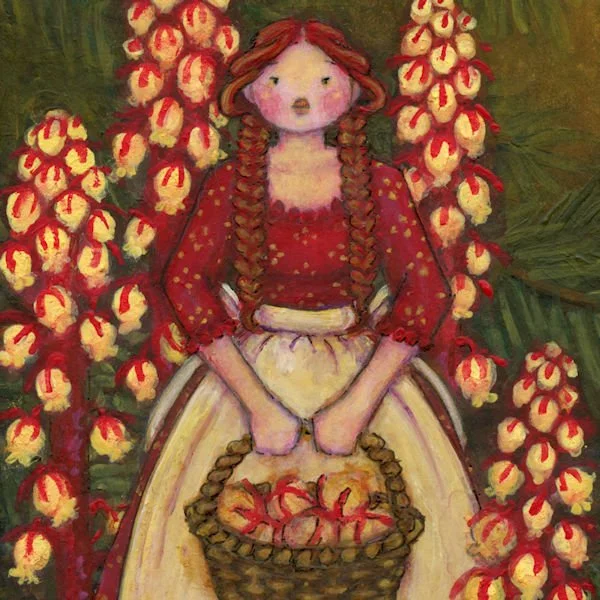
Woodland Pinedrops, giant bird's nest, Pterospora andromeda
One of the strangest wildflowers of the western forests is Woodland Pinedrops. She's found in the western US, Canada and Mexico, and also in the northeast, regions separated by the Great Plains. She has no chlorophyll, instead lives in a parasitic relationship with mycorrhizal fungi under conifer trees. She's also protocarnivorous~ her sticky stem traps small insects. She can grow 1-3 feet tall (or more), blooming from June through August. Her woody, dried stems with pumpkin-shaped seed pods will likely stand until next summer.
In the Salish–Spokane–Kalispel language she is called "senchelep tapemis", which can be translated as "coyote's arrow". In the Jemez language of New Mexico, her name translates as "Elk Girl tree".
Shop prints of Woodland Pinedrops~ 5×7 * 8×10 * poster print
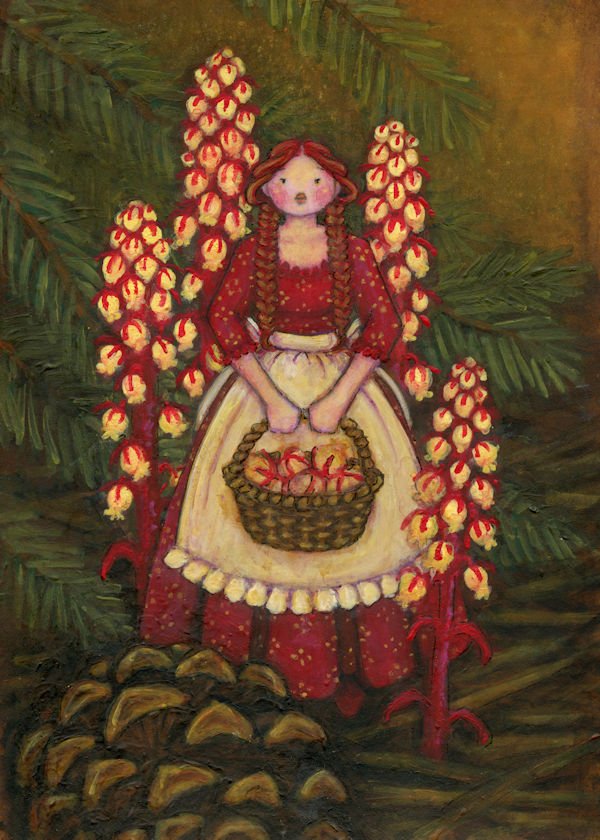
Woodland Pinedrops, giant bird's nest, Pterospora andromeda
One of the strangest wildflowers of the western forests is Woodland Pinedrops. She's found in the western US, Canada and Mexico, and also in the northeast, regions separated by the Great Plains. She has no chlorophyll, instead lives in a parasitic relationship with mycorrhizal fungi under conifer trees. She's also protocarnivorous~ her sticky stem traps small insects. She can grow 1-3 feet tall (or more), blooming from June through August. Her woody, dried stems with pumpkin-shaped seed pods will likely stand until next summer.
In the Salish–Spokane–Kalispel language she is called "senchelep tapemis", which can be translated as "coyote's arrow". In the Jemez language of New Mexico, her name translates as "Elk Girl tree".
Shop prints of Woodland Pinedrops~ 5×7 * 8×10 * poster print
Quisque iaculis facilisis lacinia. Mauris euismod pellentesque tellus sit amet mollis.