
Kinnikinnick - 8x10 print
Kinnikinnick - 8x10 print
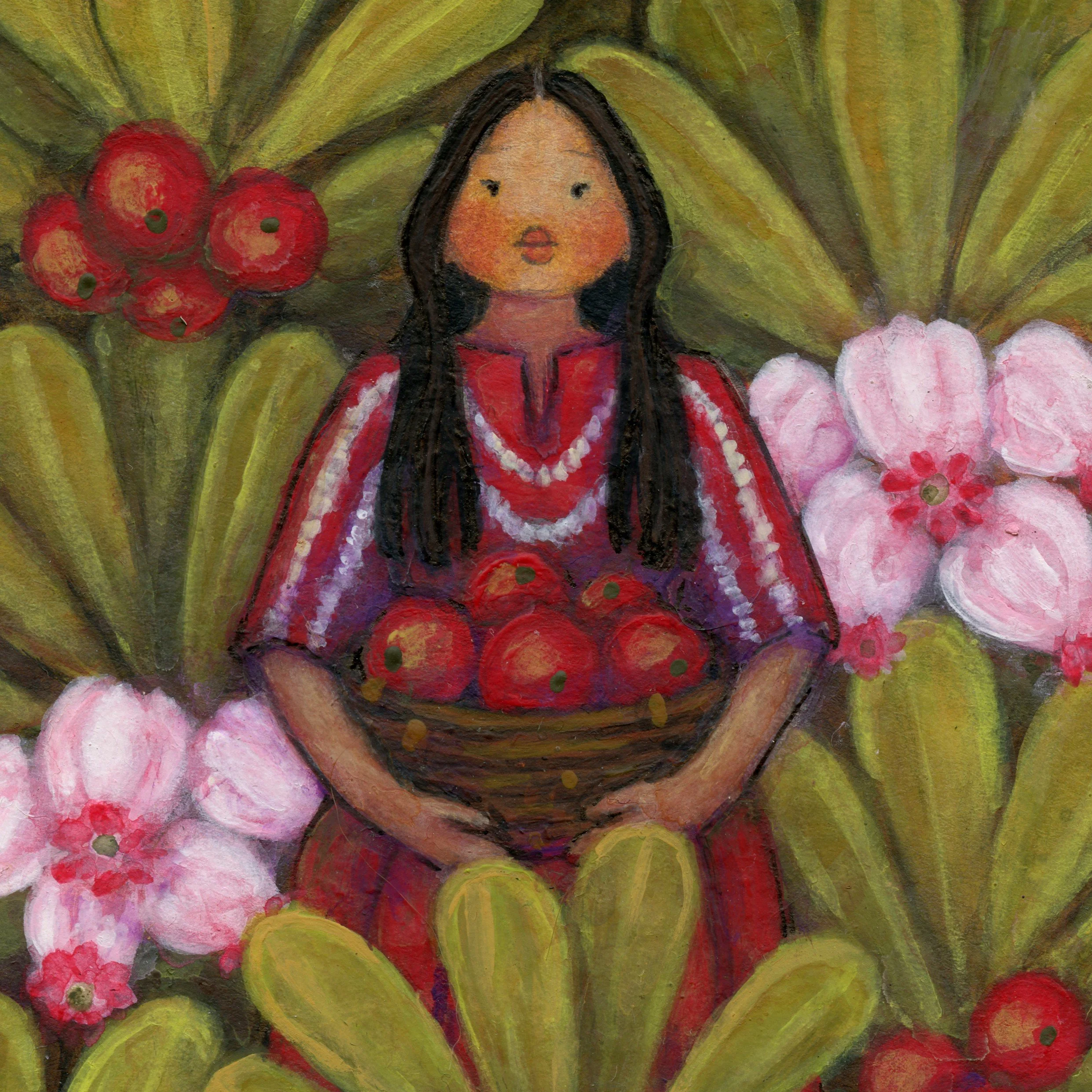
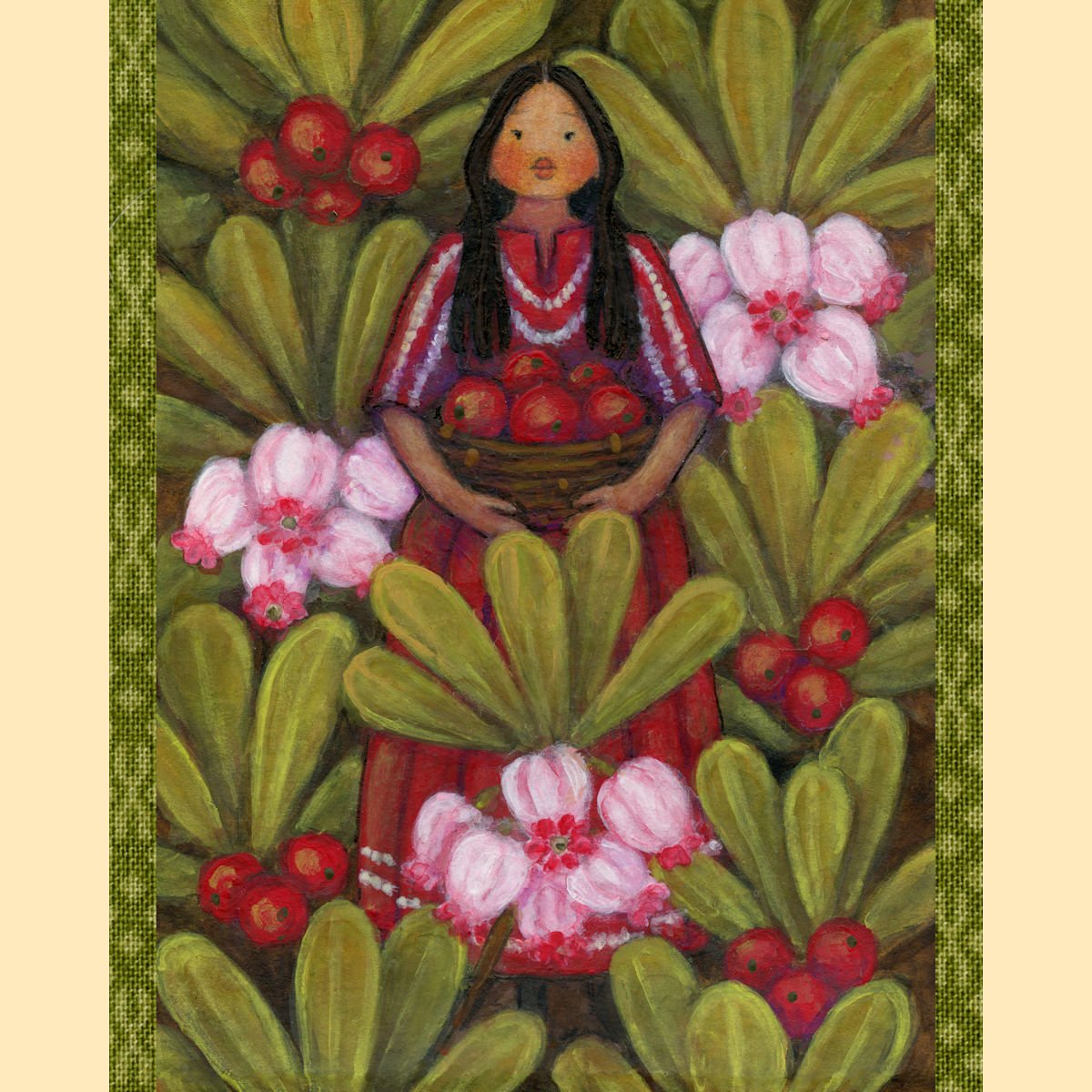
Also known as bearberry or Arctostaphylos uva-ursi, she is a low-growing evergreen with soft leathery leaves, bell-shaped pink flowers in spring, and bright red berries in late summer. It grow into large mats that cover the forest floor, close to the earth, often in sandy or rocky soils, and has long been known across many Indigenous nations for its importance. Kinnikinnick is an Algonquin word widely used to describe traditional smoking blends, often including the leaves of this plant. Beyond that, bearberry has been used in many ways~ as a nutritional source (the berries, high in Vitamin C, were cooked with meat and dried into cakes), and as medicine (now commonly found in most supplement aisles), as a grounding presence on the land, and as part of cultural practices that are specific to the nations who hold that knowledge.
Here, she gathers berries in a woven pine needle basket, wearing a Plains red trade cloth dress inspired by historical garments. I am not Indigenous, and this painting comes from a place of respect rather than authority. I offer it with care, acknowledging the living cultures, histories, and sovereignty of Indigenous peoples (past, present and future), and also in solidarity with sisters. Domestic violence has no cultural boundaries, but in some places in the US, Indigenous women disappear at an astounding ten times the national average. I'm sharing this piece in recognition of Red Dress Day (May 5), which honors Missing and Murdered Indigenous Women, Girls, and Two-Spirit people (MMIW). The red dress has become a powerful symbol of remembrance, visibility, and the ongoing call for justice.
This is an 8×10” giclee print of my original painting, Kinnikinnick. It’s printed with archival ink on thick, textured cotton rag paper, signed on the back, packaged in a protective sleeve with backing board, and ready for a standard-size frame. 70% of proceeds will be donated to NIWRC/National Indigenous Women’s Resource Center, supporting advocacy, safety, and healing for Indigenous communities. If you’re interested and able, I encourage you to learn more, listen to Indigenous voices, and support organizations doing this work.
Archival prints are shipped in a flat envelope through USPS Priority Mail.
Quisque iaculis facilisis lacinia. Mauris euismod pellentesque tellus sit amet mollis.